Facial Micro-Expression (FME) Workshop 2026
Pushing Boundaries in Temporal and Spatial Subtle Movement Analysis
This workshop focuses on advancing the study of facial micro-expressions (FME) in computational analysis, spanning across interdisciplinary fields and incorporating the latest techniques in machine learning, multimodal analysis, and more.
Important Update
📢 The workshop date is confirmed: 25th May 2026.
Keynote Speakers
Keynote 1

Speaker: Prof. Wataru Sato
Title: Psychological and Neural Mechanisms of Facial Expression: Dynamic Coupling Between Subjective Emotion and Facial Muscle Activity
Overview: Emotions comprise multiple coordinated components, including facial expressions and subjective experiences, yet their underlying mechanisms remain unclear. To address this issue, we recorded participants’ facial expressions alongside dynamic ratings of valence and arousal during emotionally evocative film viewing. Facial responses, such as lip-corner pulling, were found to track moment-to-moment changes in subjective valence. Using functional magnetic resonance imaging, we further showed that facial responses were associated with activity in limbic and sensorimotor regions, whereas subjective experiences were linked to medial parietal and temporoparietal cortices. Network analyses revealed a hierarchical structure in which perceptual processing modulates facial responses, which in turn influence subjective experience. I discuss how these findings inform the understanding of subtle facial expressions, including micro-expressions, and their implications for affective computing.
Bio: Wataru Sato is a Team Director of the Psychological Process Research Team, Guardian Robot Project at RIKEN, and an Adjunct Professor at the Graduate School of Informatics, Kyoto University. He received his Ph.D. from Kyoto University. His research integrates psychology, neuroscience, and robotics to investigate the mechanisms of human emotion and social interaction. He has conducted extensive studies on the dynamic relationship between subjective emotional experience and facial expressions.
Keynote 2
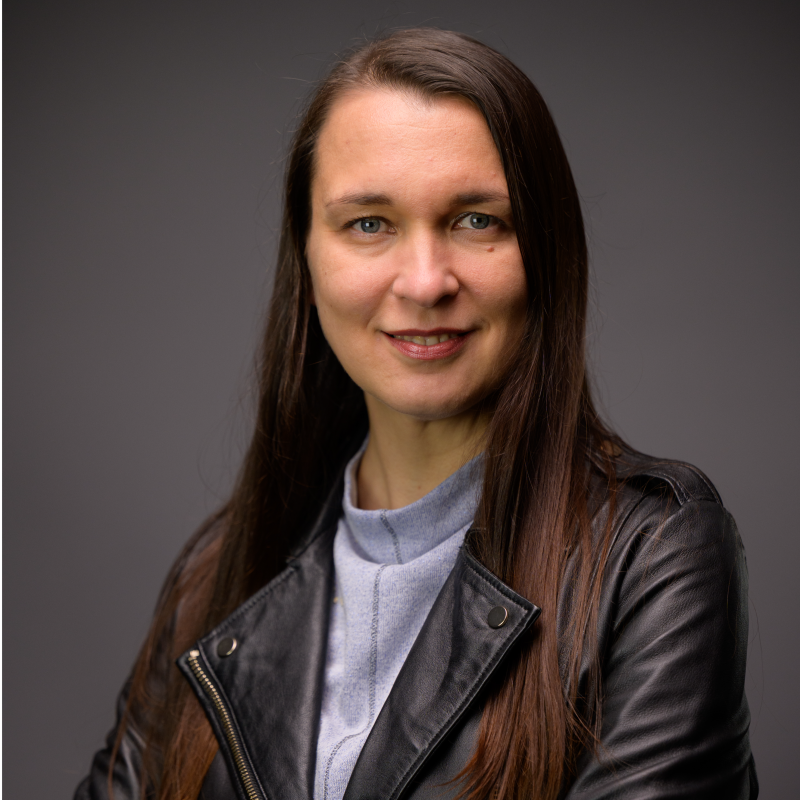
Speaker: Dr. Daria Vazhenina
Title: Bridging Research and Reality: Facial Expression Analysis Under Real-World Constraints of Data, Privacy, and Deployment
Overview: This keynote addresses the challenge of bridging the gap between state-of-the-art facial expression research and real-world industrial deployment, where constraints on data availability, privacy, and scalability are unavoidable. While facial expressions are highly informative yet fleeting signals, progress in applying them beyond controlled laboratory settings is limited by small, non-commercially licensed datasets, inconsistent annotations, and strict regulatory requirements governing facial and emotional data. The keynote further explores pathways toward responsible and commercially viable facial expression analysis for real-world applications such as intelligent mobility, human–machine interaction, and smart environments.
Bio: Dr. Daria Vazhenina leads research and development in human modeling within the Behavior AI team at Woven by Toyota’s Woven City project. Her research focuses on behavior modeling, video understanding, and speech recognition, with an emphasis on machine learning methods for capturing subtle patterns in human behavior. Passionate about diversity and continuous learning in the tech industry, Dr. Vazhenina is also an active community leader supporting Women in Software Engineering in Japan.
Program Agenda
| Time | Agenda | Speaker |
|---|---|---|
| 08:45 – 09:00 | Arrival and Networking | |
| 09:00 – 09:05 | Welcome | Dr Adrian Davison – FME Chair |
| 09:05 – 09:45 | Keynote 1 Title: Psychological and Neural Mechanisms of Facial Expression: Dynamic Coupling Between Subjective Emotion and Facial Muscle Activity | Prof. Wataru Sato Team Director of the Psychological Process Research Team, Guardian Robot Project at RIKEN, Adjunct Professor, Kyoto University |
| 09:45 – 10:25 | Oral Session 1 (Presentation format: 20 minutes = talks and Q&A) | |
|
Title: Event-based Liveness Detection using Temporal Ocular Dynamics: An Exploratory Approach Authors: Nicolas Mastropasqua, Ignacio Bugueno-Cordova, Rodrigo Verschae, Daniel Acevedo, Pablo Negri |
Nicolas Mastropasqua Universidad de Buenos Aires, Facultad de Ciencias Exactas y Naturales, Department of Computer Science, Argentine. | |
|
Title: Functional Differentiation of Postural Cues across Body Regions in Deception Detection: Implications for Human-Machine Trust and Interaction Systems Authors: Xiaoyu Chen, Xunbing Shen, Charity Kambale |
Charity Kambale | |
| 10:25 – 10:50 | Coffee Break and Networking | |
| 10:50 – 11:30 |
Keynote 2 Title: Bridging Research and Reality: Facial Expression Analysis Under Real-World Constraints of Data, Privacy, and Deployment |
Dr Daria Vazhenina Woven by Toyota |
| 11:30 – 12:10 | Oral Session 2 | |
|
Title: Investigating the Relationship Between Micro-Expressions and Cognitive Load via a Novel Maze Paradigm Authors: Lin Zhao, Jingting Li, Zizhao Dong, Yu Qian, Su-Jing Wang |
Lin Zhao Institute of Psychology, Chinese Academy of Sciences | |
|
Title: Facial Expression Features of Deception in Dynamic Naturalistic Social Interactions Authors: Ailian Li, Jingting Li, Su-Jing Wang, Ye Liu |
Ailian Li Institute of Psychology, Chinese Academy of Sciences | |
| 12:10 – 12:50 | Micro-Expression Grand Challenge (MEGC) Session – Chaired by Dr Xinqi Fan (Presentation format: 20 minutes = talks and Q&A) | |
|
Title: MEGC2026: Micro-Expression Grand Challenge on Visual Question Answering Authors: Xinqi Fan, Jingting Li, John See, Moi Hoon Yap, Su-Jing Wang, Adrian K. Davison |
Dr Xinqi Fan - MEGC Chair | |
|
Title: Exploring Bayesian Prior-Driven Pseudo-Profile Reasoning for MLLM-based Micro-Expression Analysis Authors: Mengjiong Bai, Chengyan Wang, Haoyu Chen, Yuting Xie, Guoying Zhao |
Dr Mengjiong Bai - University of Oulu | |
| 12:50 – 13:00 | Closing | Dr Adrian Davison – FME Chair |
Intro
Facial micro-expressions (MEs) are brief, involuntary facial movements that occur when individuals experience emotions they attempt to suppress, often in high-stakes scenarios. With durations typically below 500 ms, MEs provide unique cues for hidden or subtle affect, yet remain difficult to spot and recognize computationally due to scarce labeled data, annotation ambiguity, and the need for fine-grained spatiotemporal modeling.
This workshop aims to bring together researchers across computer vision, multimedia, and affective computing to advance temporal and spatial subtle movement analysis. We particularly encourage work that leverages modern learning paradigms (e.g., self-supervised learning, multimodal learning, and foundation models) while addressing challenges in data, evaluation, and robustness.
Focus
- Psychological mechanisms and applications of inferring mental states from subtle facial cues
- Micro-expression spotting & recognition under limited supervision and real-world variability
- Fine-grained spatiotemporal modeling of subtle facial motion in videos
- Learning with scarce / noisy / inconsistent labels and annotation uncertainty
- Multimodal ME analysis beyond RGB (e.g., NIR/IR, depth, audio, physiological signals)
- Foundation models for subtle affect (VLMs / multimodal LLMs), including prompt-based and zero-shot setups
- Datasets, benchmarks, and protocols that improve reproducibility and fair comparison
Call for Papers
Topics of Interest:
We invite original, unpublished submissions (including position papers and challenge/benchmark papers) on topics including but not limited to:
- Psychological Mechanisms of Emotion and Deception
- Cognitive load and emotional arousal associated with concealed emotions (e.g., lying) and their behavioral manifestations
- The role of nonverbal leakage and micro-expressions in detecting deception
- Cross-cultural variations in the psychological interpretation of ambiguous facial cues
- Micro-Expression Analysis
- Micro-expression spotting, temporal localization, and onset/offset detection
- Micro-expression recognition, intensity estimation, and fine-grained affect modeling
- Motion representation learning (optical flow, strain, subtle dynamics, action units)
- ME vs. macro-expression / subtle expression discrimination
- Cross-dataset, cross-subject, and cross-cultural generalization
- Robustness to head pose, illumination, occlusion, compression, and low-quality video
- Learning with Limited Supervision
- Self-supervised / unsupervised learning for ME spotting and recognition
- Weakly supervised, semi-supervised, and active learning for ME analysis
- Few-shot, zero-shot, open-set, and continual learning for subtle expressions
- Learning from noisy labels, annotator disagreement, and label uncertainty modeling
- Domain adaptation, test-time adaptation, and personalization
- Multimodal, Multi-View, and 3D
- Multimodal fusion: RGB + NIR/IR/thermal/depth/event cameras
- Physiological signals for affect inference (e.g., ECG/PPG heart rate, EEG, EMG)
- Multi-view facial analysis and 3D/4D face modeling for subtle motion
- Temporal synchronization and alignment across modalities
- Multimodal benchmarks and evaluation protocols
- Foundation Models and Vision-Language Approaches
- Vision-language models (VLMs) for expression understanding and ME reasoning
- Multimodal LLMs for ME analysis with natural-language interaction
- Prompt engineering, instruction tuning, and structured prompting for subtle cues
- Fine-tuning / adapter-based tuning on facial expression corpora for ME sensitivity
- Zero-shot / in-context learning for ME spotting and recognition
- Model interpretability: ensuring genuine ME understanding vs. superficial correlations
- Data, Benchmarks, and Reproducibility
- New spontaneous ME datasets, annotations, and collection protocols
- Benchmark challenges: metrics, splits, standardized evaluation, reproducible baselines
- Synthetic data, simulation, augmentation, and data-centric ME learning
- Bias, fairness, and demographic robustness analysis
- Uncertainty-aware evaluation and confidence calibration
- Applications and Responsible Use
- Affective computing, social signal processing, and human-centered AI
- Mental state and wellbeing analysis (with appropriate ethical safeguards)
- Human–computer interaction and assistive technologies
- Ethical considerations, privacy, and responsible deployment of ME technologies
Note: The detailed workshop agenda will be announced after paper decisions and final scheduling.
Important Dates
- Paper Submission Open: February 16, 2026
- Paper Deadline:
March 16, 2026March 30, 2026 (23:59 AoE) - Paper Notification:
April 13, 2026April 14, 2026 (23:59 AoE) - Camera Ready: April 21, 2026 (aligned with the FG conference)
- Workshop Date: May 25, 2026
Submission
Paper Submission Procedure
Paper submissions will follow the FG 2026 formatting and length requirements. We will use the same submission system as FG 2026. Once logged in, you can select the Track: "Micro-Expression (FME) Workshop 2026: Pushing Boundaries in Temporal and Spatial Subtle Movement Analysis":
FME workshop papers will follow the long paper format of FG 2026, consisting of 8 pages plus references. The submission should include substantive new research techniques, findings, and applications. Accepted workshop papers will be included in the FG 2026 workshop proceedings, subject to the conference publication policy.
Paper Review Procedure
We will adopt a double-blind review process for regular workshop papers:
- Each submission will receive at least two reviews from the members of the programme committee or external experts.
- Reviewers will be selected based on their expertise in micro-expression (ME), facial analysis, affective computing, multimodal learning, and related areas.
- Acceptance decisions will be based on originality, technical quality, clarity, and relevance to micro-expression analysis and subtle emotion understanding.